MASTER OF ARCHITECTURE
Kyle Do Couto & Stenzo Martin—Ontario Association of Architects Exceptional Leadership Through Design Excellence: Climate Action
![]()
Kyle Do Couto & Stenzo Martin—Ontario Association of Architects Exceptional Leadership Through Design Excellence: Climate Action

About the Award
Ontario Association of Architects Exceptional Leadership Through Design Excellence: Climate Action:
For best demonstrated design excellence and exemplary response to the climate crisis.
The Promenade: Toronto’s Flood Remediation Tunnel
The Promenade transforms Toronto’s flood infrastructure into a dynamic public space along the waterfront, spanning from Coronation Park to the Lower Don Lands. By integrating the proposed Don River and Central Waterfront Wet Weather Flow System (DR&CW) tunnels with pedestrian pathways, retail, and recreational spaces, the project reimagines essential infrastructure as a civic amenity.
Toronto faces chronic flash flooding, yet existing mitigation strategies such as green spaces and conventional stormwater tunnels are either unevenly distributed or hidden from public life. The Promenade addresses both challenges by making the city’s flood management accessible and engaging.
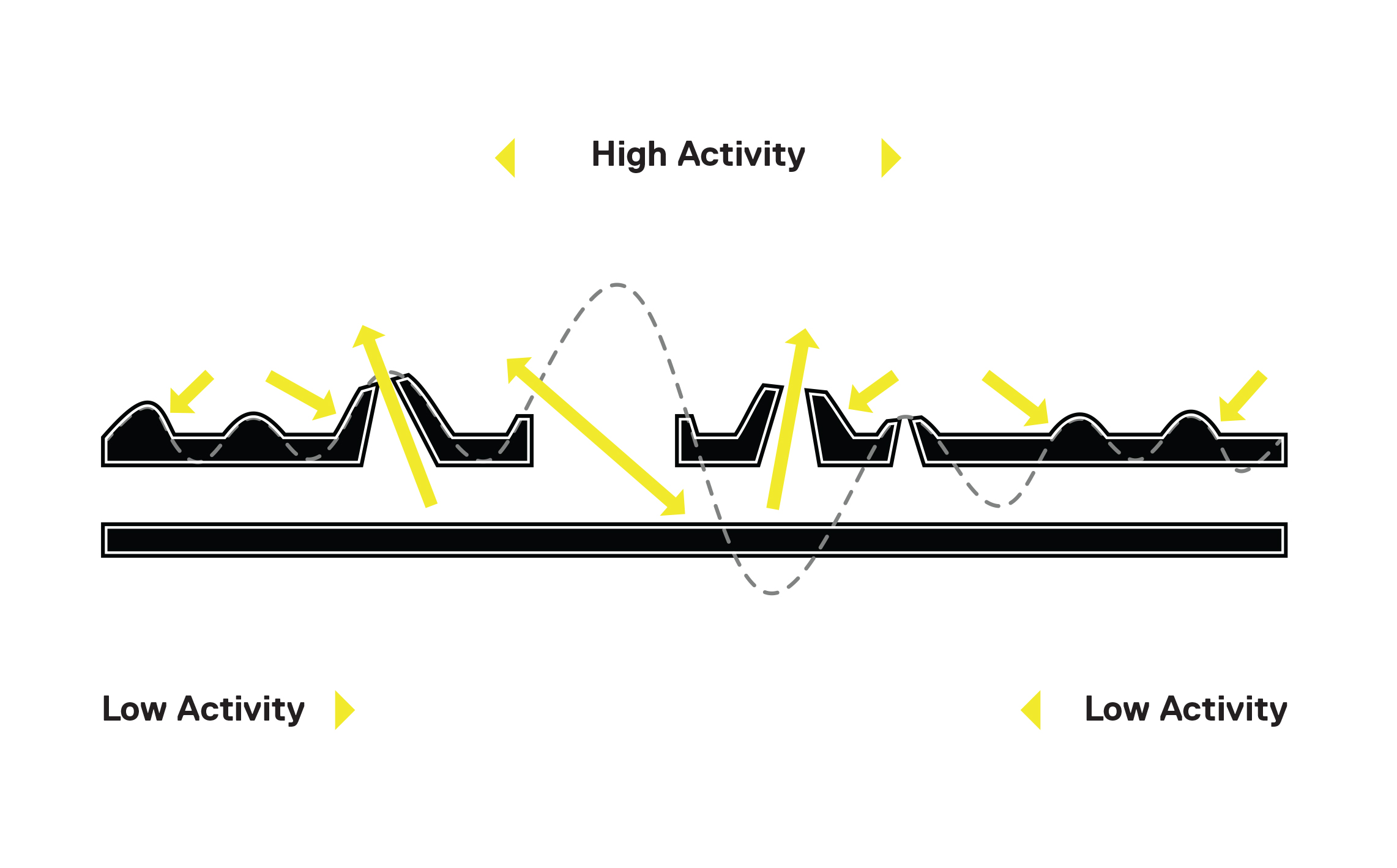
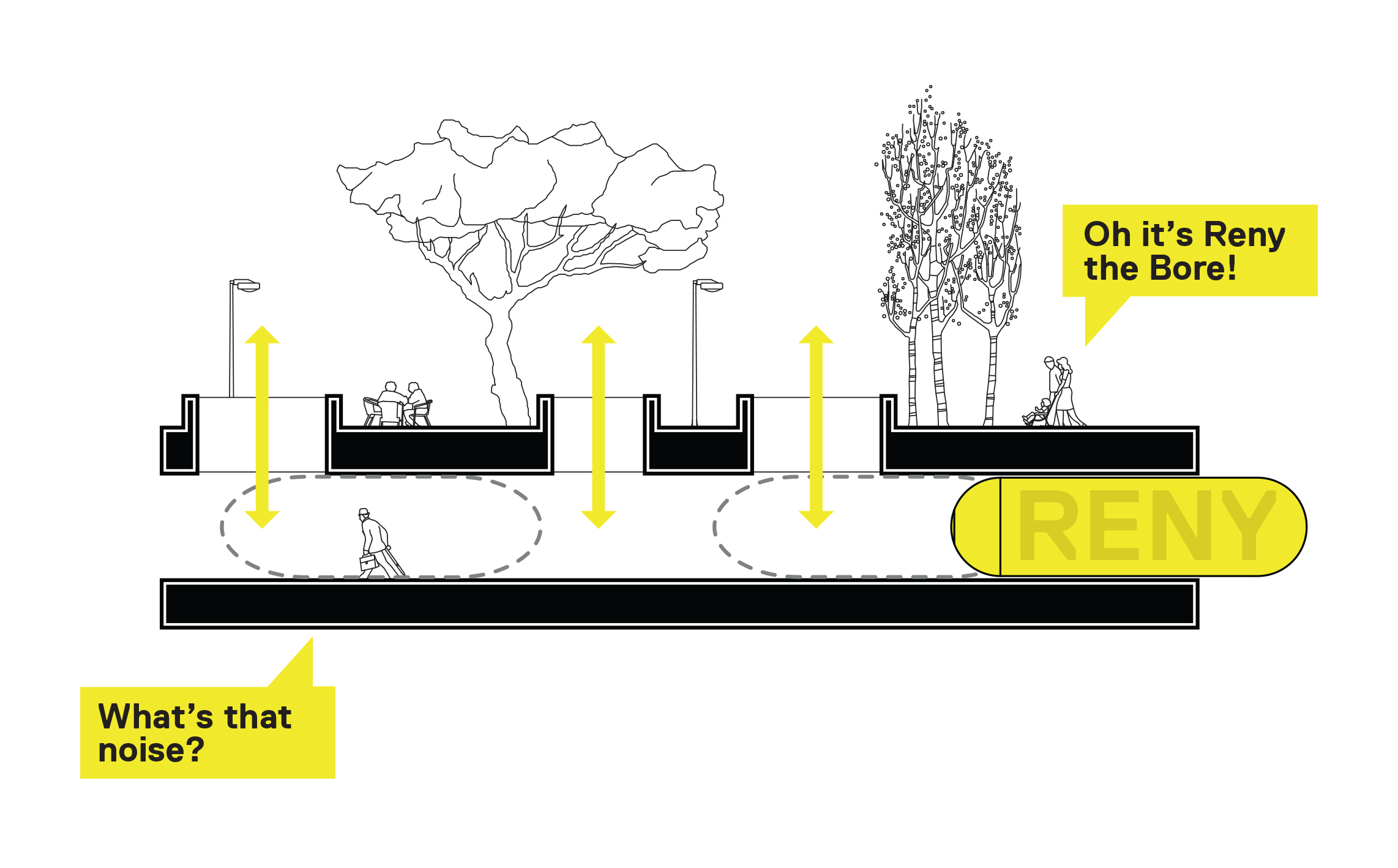
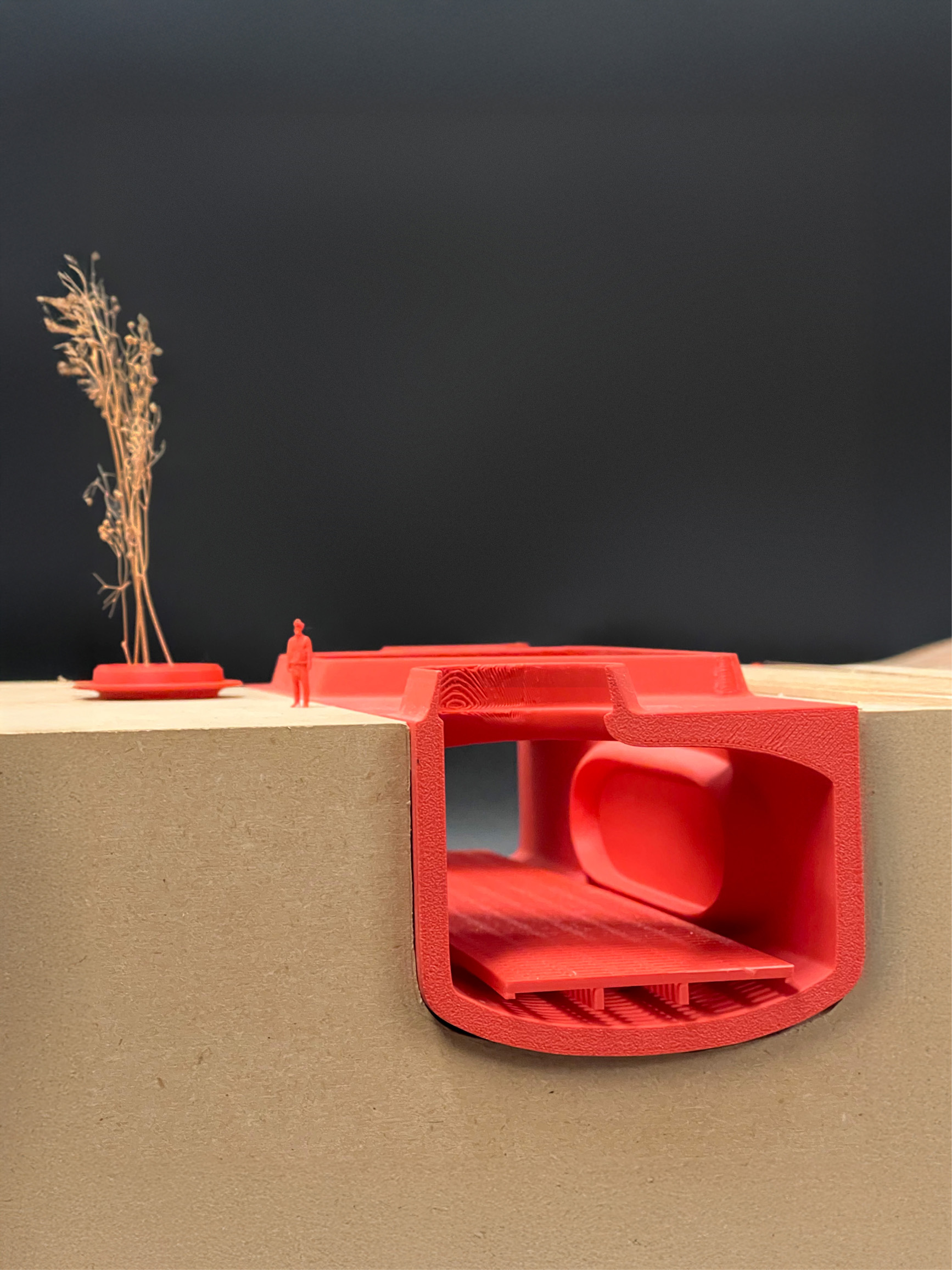
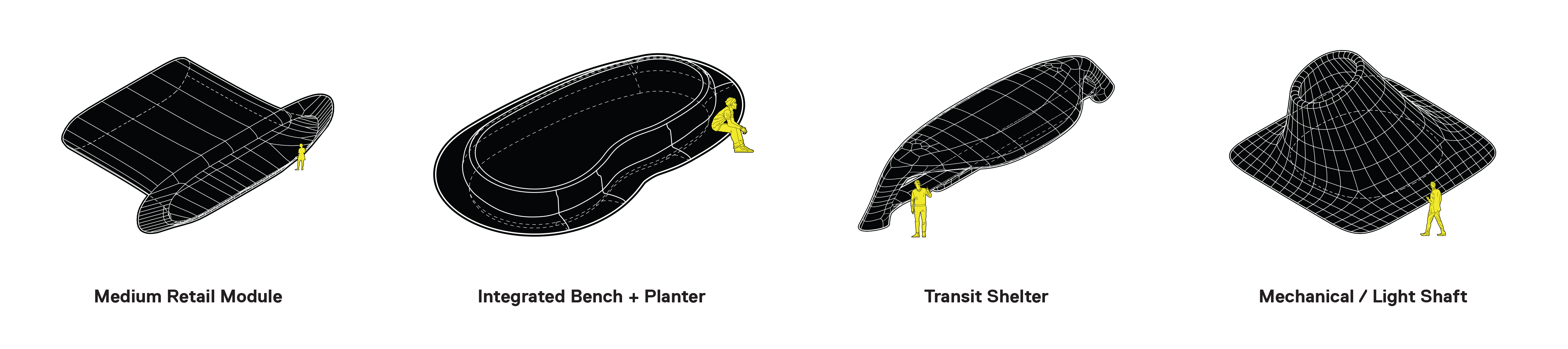
The design consists of a winding, 6-meter deep, 7-meter wide tunnel with openings that correspond to varying activity levels along the waterfront. Above and below grade experiences are connected via lightwells, bridges, elevated walkways, and integrated urban furniture. Modular retail, institutional, and recreational spaces range from 6m to 14m wide, supporting the return of small businesses while also accommodating for potential larger tenants. During extreme storms, the promenade continues to function as a stormwater channel, temporarily becoming an artificial canal, with storm doors protecting each module.
By linking pockets of the existing waterfront, activating underused spaces, and making infrastructure legible, the Promenade strengthens waterfront identity while introducing a new typology of public infrastructure where technical necessity meets urban resilience.
Key Strategies
Programmatic Activation:
Modular retail, institutional, and recreational spaces are integrated within the promenade. Modules vary in width to accommodate a range of retail scales, adding opportunity for mom and pop businesses. In addition, storm doors secure each module during major flash flood events.
Urban Integration:
Responding to the current fragmented waterfront, the Promenade enhances connectivity through a unified visual identity, linking existing and proposed sunken plazas, stepped retaining walls, and expanded wave decks.
Infrastructure as Amenity:
Lightwells, bridges, and pedestrian pathways, offer both above and below grade experiences. During flood events, the promenade serves its primary function, channeling stormwater while temporarily transforming into an artificial canal that overlays public use with infrastructural necessity.
Ontario Association of Architects Exceptional Leadership Through Design Excellence: Climate Action:
For best demonstrated design excellence and exemplary response to the climate crisis.
The Promenade: Toronto’s Flood Remediation Tunnel
The Promenade transforms Toronto’s flood infrastructure into a dynamic public space along the waterfront, spanning from Coronation Park to the Lower Don Lands. By integrating the proposed Don River and Central Waterfront Wet Weather Flow System (DR&CW) tunnels with pedestrian pathways, retail, and recreational spaces, the project reimagines essential infrastructure as a civic amenity.
Toronto faces chronic flash flooding, yet existing mitigation strategies such as green spaces and conventional stormwater tunnels are either unevenly distributed or hidden from public life. The Promenade addresses both challenges by making the city’s flood management accessible and engaging.
The design consists of a winding, 6-meter deep, 7-meter wide tunnel with openings that correspond to varying activity levels along the waterfront. Above and below grade experiences are connected via lightwells, bridges, elevated walkways, and integrated urban furniture. Modular retail, institutional, and recreational spaces range from 6m to 14m wide, supporting the return of small businesses while also accommodating for potential larger tenants. During extreme storms, the promenade continues to function as a stormwater channel, temporarily becoming an artificial canal, with storm doors protecting each module.
By linking pockets of the existing waterfront, activating underused spaces, and making infrastructure legible, the Promenade strengthens waterfront identity while introducing a new typology of public infrastructure where technical necessity meets urban resilience.
Key Strategies
Programmatic Activation:
Modular retail, institutional, and recreational spaces are integrated within the promenade. Modules vary in width to accommodate a range of retail scales, adding opportunity for mom and pop businesses. In addition, storm doors secure each module during major flash flood events.
Urban Integration:
Responding to the current fragmented waterfront, the Promenade enhances connectivity through a unified visual identity, linking existing and proposed sunken plazas, stepped retaining walls, and expanded wave decks.
Infrastructure as Amenity:
Lightwells, bridges, and pedestrian pathways, offer both above and below grade experiences. During flood events, the promenade serves its primary function, channeling stormwater while temporarily transforming into an artificial canal that overlays public use with infrastructural necessity.